Ursula Dabrowsky: Inner Demon

Let’s all celebrate the North American premier screening of my friend Ursula Dabrowsky’s ‘Inner Demon’ at the Etheria Film Festival coming up this June 13th. This film is spellbinding and ground breaking, and it is clear that this talented writer / director is a trend setter in the making of horror films. Good luck on the red carpet, Ursula!

11214084_848921088513286_2651056878783669854_n

Posted in horror, Horror Movie, Sarah Jeavons, Scary, Ursula Dabrowsky | Tagged , , , , , , | Leave a comment

Guest Post: Erin Thorne

My Note: Erin is plainly one of the most exciting current writers of weird fiction. I was pleased to receive a response from her on Facebook a few years ago when I designed the site to attract fellow writers, editors, and publishers. She was nice enough to read a collection of mine, and I was thrilled when she let me enjoy her wonderful short story titled ‘Spoiled Pets.’ I noticed right off that this was a rich voice in the genre, filling scenes with atmosphere and wonderful detail. I next bought ‘Diane’s Descent,’ a novella that is ultimately satisfying, especially considering Erin’s superior descriptive ability.

In Erin’s post she mentions our running conversation concerning more comprehensive grammatical, structural, and thematic issues, all that I am familiar with as a result of years of work as a professor of English. What she doesn’t talk about more specifically is the crucial help she has given me on my own particular journey. The most memorable for me, was a couple of years ago when I hit a snag writing my (now) upcoming novel ‘Phantom Effect.’ I sent her the first two chapters or so and her encouragement remains one of the reasons it was continued and brought to conclusion. Thank you, Erin. You are simply awesome.  So, pick a plot, put up a marker, and etch something into the stone!

Erin Thorne

Writing on Your Feet

I’d like to begin by thanking Michael Aronovitz for inviting me as a guest blogger on his site; he and I have had many an online chat about the subtleties of writing, and I’ve had the pleasure of reading some of his work, including his book of chilling and memorable short stories, The Voices in Our Heads.

This blog is largely about my own writing process. When I’m creating a new story, I prefer to do it in an undisturbed location, where I can focus on grammar and plot development in peace. However, as a mother of two young children, this isn’t always practicable. Believe it or not, I’ve literally done a great deal of writing on my feet. My laptop sits upon a sideboard in a central location; I often compose my plots and develop characters while simultaneously playing referee, fielding questions, and dishing out snacks. It’s chaotic, yet at the end, the finished product is neat and orderly.

Of course, this does not happen without a healthy dose of editing. This is usually done in a quiet place, after the kids have gone to bed. My goal is to submit a story or manuscript that is as good as I can make it, and I read each sentence carefully. The ones that seem a bit strained, or that don’t flow, are either altered or eliminated.

Above all, I strive to constantly improve the intricacies of my craft. Michael has helped me with this from time to time, in his capacity as a fellow author and as a friend. His experience as an English teacher makes him an excellent advisor, and his tact ensures that the feedback he gives is worded in the most diplomatic way. This is crucial, at least to me. I’ve received some truly terrible advice from people who weren’t qualified to give it, and dismissed both them and their input accordingly. There’s nothing wrong with asking for help when you’re stuck, or requesting an honest critique of your work, but I can’t overstate the importance of finding the right person to assist you.

One good method, especially if you’re aware that your interlocutor has published something, is to read his or her work for yourself. Try to choose someone who reads and writes in your own chosen genre, since they’re more likely to give an assessment of your project that takes into account other examples in the field. You don’t need to make every change that is suggested, but the ones that will improve your writing should be given serious consideration.

Keep the soul of your work intact. Preserve its spirit and essence, yet clothe it in words that flow harmoniously. Read it aloud, and see if the phrasing would be appealing to anyone who didn’t personally know you. Once it’s trimmed and polished, send it on its way, and begin your next project.

One of my books is being given new life as I write this. Behind the Wheel, a collection of short stories which was previously self-published, has been picked up by Great Old Ones Publishing. It’s slated to be released in May, and features a full-color, commissioned painting for each tale by artist Robert Chipman, of Ocean Moon Creations. This same publisher accepted another illustrated book of stories from me last year, titled Losers and Their Friends, which is available through Amazon.

Links:

My Facebook author’s page – www.facebook.com/authorerinthorne

My Amazon author’s page, with complete bibliography available for purchase– www.amazon.com/author/erinthorne

My website –www.erinthorne.org

The site of Robert Chipman, the exclusive artist for Behind the Wheel and one of the contributing artists for Losers and Their Friends – www.oceanmooncreations.com

The site of Great Old Ones Publishing – www.greatoldonespublishing.com

Biography:

Erin

Erin Thorne is a lifelong resident of Massachusetts, where she lives with her family. She writes primarily paranormal fiction, and is the author of Diane’s Descent, a supernatural novella set in a rural New York town, as well as Deals Diabolical, a collection of eight spine-tingling tales. Her latest book, Losers and Their Friends, was released by Great Old Ones Publishing in 2014. Ms. Thorne is also a member of the New England Horror Writers Association, a regional organization composed of authors who specialize in horror and dark fiction.

Her work has been featured in Adventures for the Average Woman (now IdeaGems Magazine), Reflections of the End (Author’s Choice Select Anthologies), and Canopic Jars: Tales of Mummies and Mummification. She also has a story in the debut anthology from Tenebris Books, Willow, Weep No More. Her short tale, “The Bug Lady,” appears in the anthology, Bugs: Tales that Slither, Creep, and Crawl.

Visit her website at www.erinthorne.org, and her author’s pages on Amazon and Facebook:

www.amazon.com/author/erinthorne

www.facebook.com/authorerinthorne

Posted in Anthology, Blogging, Book Reviews, Books, fiction, Super Fantastical People, Uncategorized, Writing | Tagged , , , , , , , , , , , , | Leave a comment

Guest Post: Jason Brock

My Note: I have known Jason for better than four years now, and he is a living example of a Renaissance Man. A pioneer in film, music, authoring, and editing, Jason is a force in the world of weird fiction not to be “reckoned with,” but rather, admired. He is smart, very smart, and ultimately creative. Jason Brock is one of the hardest working men in the industry, and I am proud to have the opportunity to publish this guest post.  

So Jason, pick a plot, put up a marker, and etch something into the stone!

Jason Brock

When I was invited to write a guest blog by my friend Michael Aronovitz, I was at a loss as to what I would write about. My personal crises du jour? The art and craft of writing and editing? Something else? So the process went, as is typical for me. Then it occurred to me that my dear wife, Sunni, and I had been on a bit of a movie kick lately, and that started me thinking about the way film is put together, and why it is done the way that it is. We are filmmakers ourselves (The AckerMonster Chronicles!; Charles Beaumont: The Short Life of Twilight Zone’s Magic Man), so it was a natural topic for me to discuss, as well as something I know likely too much about, but find enjoyable nonetheless. Therefore, a brief foray into the world of cinema, through the filter of my personal experiences. . .

There is a saying: “Sometimes it would be helpful if my life had a soundtrack so that I would know how to react.”

In one sense, cinematic expression is the ultimate ghost in the machine. It is a wholly artificial artistic endeavor, requiring much in the way of long-term planning and execution, these coordinated with several groups of people. In film studies, mise-en-scène (the various design elements of theatrical or cinematic creation and their compositional arrangement, such as props, actors, costumes, sound, sets, lighting, and so on) along with cinematography and editing are used to describe and examine the experience and aesthetic merits of a production. Of course, there are both objective (Is the scene well lit? Is there a soundtrack?) and subjective (How does it make one feel? Did the message come through the medium?) criteria.

Similarly, just as a modern multitrack audio recording is not representative of a performance that is captured live by one source, and just as all dialogue in fiction is not really meant to be “realistic” as in a transcription—with all the “ums, ahs” and repetition of genuine human speech—but is an artifice designed to reveal character, compress information, and propel a story along, so too is film an entirely artificial experience, unless it is a live broadcast of an actual event. Films are shot for dramatic effect, scored for emotional impact, and all the action is choreographed based upon a script, which was written by a writer, changed by a producer, and realized by a director.

Yet all films have one common element, something I deem “editorial syntax.”

What I mean by that is that films can immediately be grasped conceptually—across all cultures and technological boundaries—because they are assembled in a way that all humans can understand visually. The reason for that is simple: as intelligent and creative animals, we all dream. Dreaming has been the inspiration for stories, art, music, and other modes of expression for all human history. They are universal to the human experience. They can be long, short, erotic, imbue us with superhuman/supernatural powers, act as expressions of remorse or taken as omens. They can be a form of necromancy when we communicate with long-dead relatives, or they can offer solace at particularly trying times in our lives. They can soothe, they can perplex, they can terrify. This panoply of emotions is exciting, vexing, strange, and invigorating. It acts as a wellspring of creativity, from famous authors and filmmakers to accountants.

Therefore, film, which mirrors many elements of this state of (un)consciousness, is a natural outgrowth of human creativity and serves as the engine which subtly powers, what I feel, is perhaps the greatest of all artistic forms: The marriage of the moving image (in more ways than one) and sound. It is not life, but in some ways is an enhancement—it can teach, record, inform, even grant a form of immortality. When we watch a film, the actors and creators—even long dead ones—are alive, even if only by our vicarious perceptions of them and their efforts, and if only for the duration of the work itself. After that, they retreat into the mists of the past once more. This, however, is a form of living—an aspect of the human condition and experience not only of dreams, but memory, also.

These are the cores of our humanity and the soul of our individuality. Moreover, we should recognize that importance, and celebrate it.

Biography

11182879_10153331013585746_181021160_o

Jason V Brock is an award-winning writer, editor, filmmaker, composer, and artist, and has been widely published online, in comic books, magazines, and anthologies, such as Butcher Knives & Body Counts, Disorders of Magnitude (Bram Stoker Award Finalist for Nonfiction; Rondo Hatton Classic Horror Award Finalist for Best Book), Simulacrum and Other Possible Realities (fiction/poetry collection), Fungi, Weird Fiction Review, Fangoria, S. T. Joshi’s Black Wings series, and many others.

As an anthologist, he has done The Bleeding Edge, The Devil’s Coattails (both with William F. Nolan), and A Darke Phantastique (Bram Stoker Award Finalist). He was Art Director/Managing Editor for Dark Discoveries magazine for more than four years, and has a biannual pro digest called [NameL3ss], which can be found on Twitter: @NamelessMag, and on the Interwebs at http://www.NamelessDigest.com/. He and his wife, Sunni, also run Cycatrix Press, and have a technology consulting business.

As a filmmaker, his work includes the critically-acclaimed documentaries Charles Beaumont: The Life of Twilight Zone’s Magic Man, the Rondo Award-winning The AckerMonster Chronicles!, and Image, Reflection, Shadow: Artists of the Fantastic. He is the primary composer and instrumentalist/singer for his band, ChiaroscurO. Brock loves his wife, their family of herptiles, travel, and vegan/vegetarianism.

He is active on social sites such as Facebook and Twitter (@JaSunni_JasonVB), and their personal website/blog, www.JaSunni.com.

Posted in Anthology, Blogging, Book Reviews, Books, Super Fantastical People, Uncategorized, Writing | Tagged , , , , , , , , , , | Leave a comment

Guest Post: Author Marie Lavender

My Note: Marie Lavender is a phenomenal writer of romance fiction. She is the consummate professional, and I am quite fortunate to have made her acquaintance. I find romance and horror to be strangely similar actually, first by way of structure. The hiding of things, whether for the purpose of seduction or suspense, plays similarly. Also, the biggest motivation for both genres is love, as romance stories tease with what you can’t have and horror tales toy with what you are terrified to lose.

So Marie, I am proud to have you visit The Author’s Graveyard, and I would ask that you pick a plot. Put up a marker. Etch something into the stone!   

A Writer’s Journey and Process by Marie Lavender

Hi, readers! I met Michael when he stopped by my guest author blog, Writing in the Modern Age, for an interview early this month. I’d like to thank you, Michael, for the opportunity to visit yours. Mike has asked me to talk a little about myself and my writing process. I’d be happy to!  🙂

I came from a pretty simple background. I lived in a small town in a 1890s farmhouse for most of my life with the loving support of my family. I was the youngest of three children, and though my parents sometimes struggled, they never ceased to try to give us the best and to love us unconditionally.

I always had a lively imagination, and adored writing ever since the age of nine, when the stories that were in my head found a way onto the page. I loved reading as well, and I would lose myself in the fictional worlds the authors created.

 Lavender 1

At a young age, I pretty much knew that writing was my calling, though it took time and maturity to realize that I had to perfect my technique. I read everything on the subject that I could, and in high school and college, I pursued the study of creative writing. While there, I started writing my first novel and I was a copy editor for a student journal. During my senior year, I published two short stories in a university publication.

My college experience led me to a few loves and losses, and in my junior year, I met my soul mate, Chris. We’ve been together ever since.

Lavender 2

After graduation, I became determined to publish a book, and I dedicated my free time to finishing my manuscript. I read everything I could about proofing one’s own work, as well as writing a synopsis and query letter. I found several critique partners during this journey.

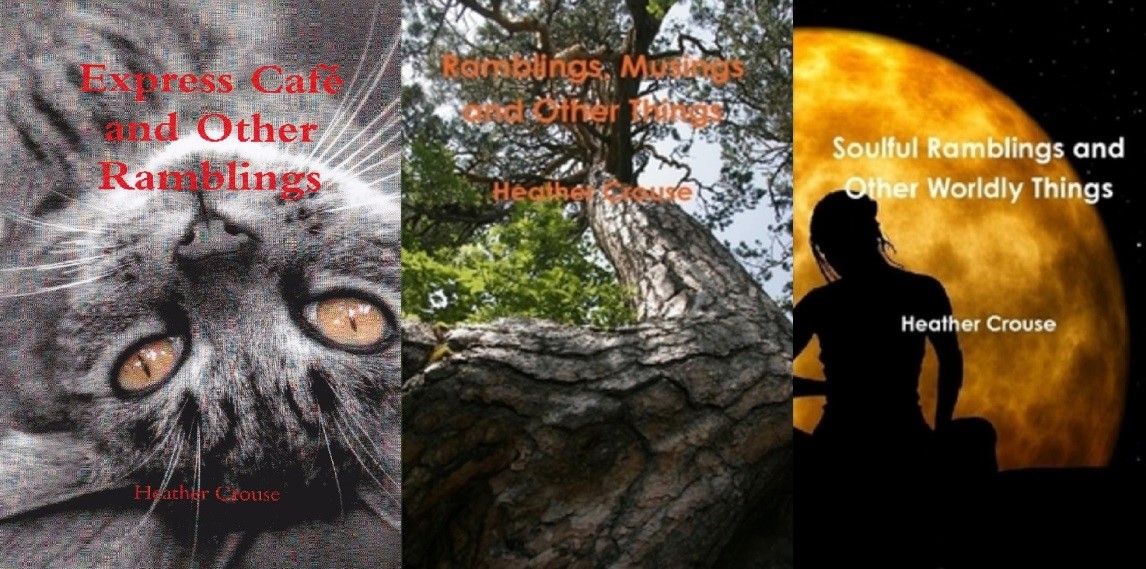
In 2010, I got into the self-publishing craze and decided to resurrect some projects that had been on the backburner in order to launch my first literary fiction and poetry anthology, Express Café and Other Ramblings. I released two more in subsequent years.
Lavender 3

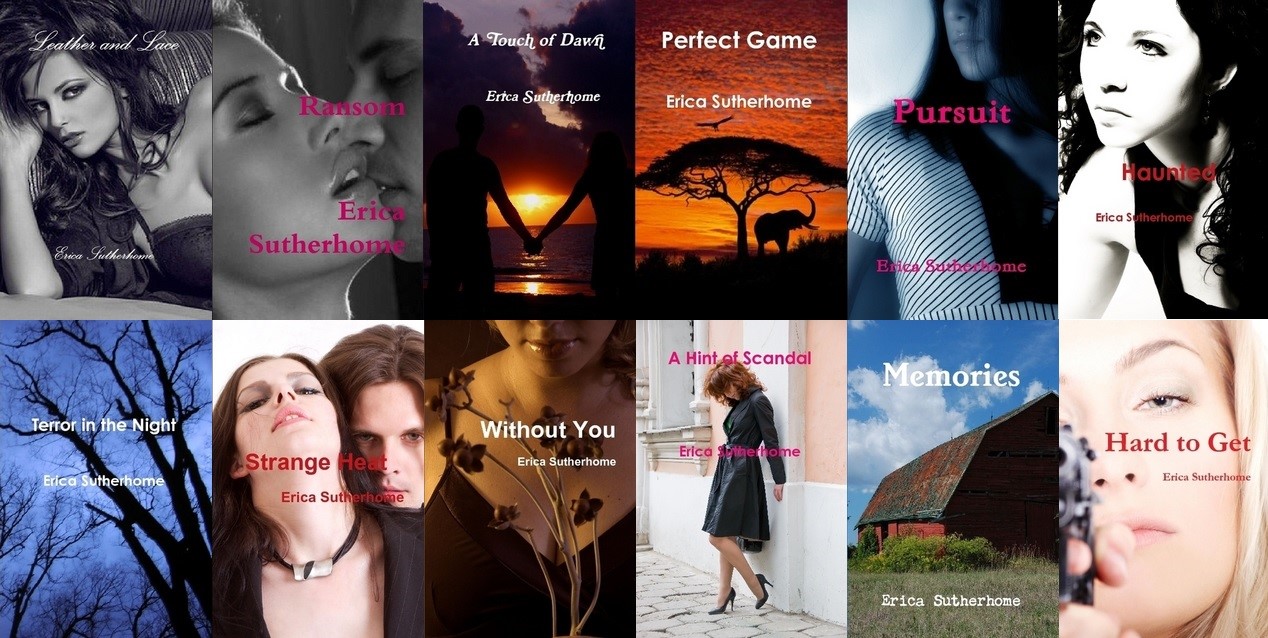
In 2011, I began the rigorous submission process to literary agents and publishers for my historical romance manuscript.  A year later, I decided to try out a new pen name, Erica Sutherhome.  I published twelve more books in the genres of contemporary romance, romantic suspense, romantic mystery and paranormal romance.
Lavender 4

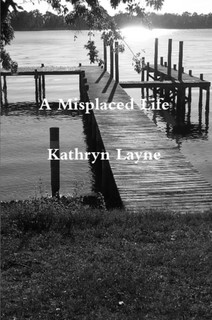
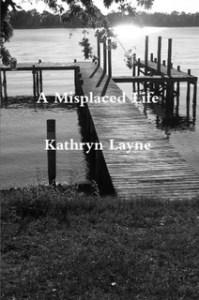
Also during that time, I released a book titled A Misplaced Life, a paranormal mystery/thriller published under the name Kathryn Layne.
Lavender 5

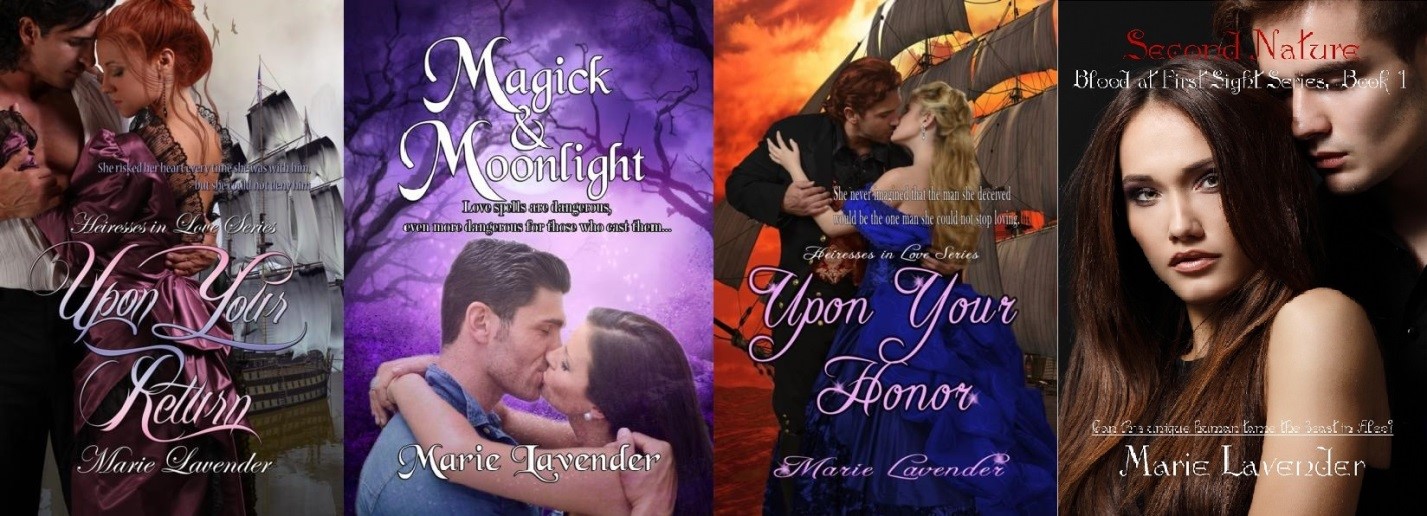
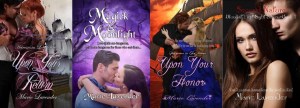
In August of 2012, I received a book contract from Solstice Publishing for my first historical romance, Upon Your Return. The book was released in February of 2013. I went on to publish three more books with the same publisher, Magick & Moonlight, Upon Your Honor and Second Nature.
Lavender 6

What else do I have in the works? The second book of the Magick Series, A Little Magick, a children’s fantasy is currently being formatted for release. I am also finishing up edits on Upon Your Love, the third and final book of the Heiresses in Love Series. I have two more books in the works for the Blood at First Sight Series, the sequels to Second Nature, and many more projects planned for the future.

As for my writing process, I am part pantster, part plotter. I start with the idea first. Sometimes it is a random scene that comes to me. At other times, it is merely a seed, an image in my head.

Lavender 7

I usually know the basic plot, but I don’t know much about the details yet. I let the scenes for a book come to me naturally. When I think I have enough to work with, I get focused and write a detailed outline. Then I start learning more about the characters and I do the necessary research in order to build the world of the story. I write official chapters at that point, trying to bring the previously written scenes into an organized whole. Through the process, I try to leave myself open to changing details if the characters lead me in a different direction, which does occur now and then. After I know the manuscript is done, it goes through major editing.

While I am writing, I load up one-subject notebooks, journals, post-it notes, and notepads with scenes and research notes. I also compose scenes for the manuscript directly on the computer Sometimes I listen to music when I’m writing, but not always. It really depends on what kind of scene I’m in the midst of, and how much research is required for it. When and where do I write? In my bedroom just before I go to sleep, during the day at the computer, or outside, right in nature. I can make any place the ideal writing location as long as it has the right amount of quiet and a decent view.

Well, that is my journey and writing process! I want to thank Michael Aronovitz once again for his invitation to stop by! It was such a pleasure to visit all of you.  🙂
Lavender 8

 Author Bio

Bestselling author of UPON YOUR RETURN and 19 other books. 2014 BTS Red Carpet Review Nominee. Finalist and Runner-up in the MARSocial’s Author of the Year Competition. Honorable mention in the January 2014 Reader’s Choice Award. Liebster Blogger Award for 2013 and 2014. Top 50 Authors on AuthorsDB.com. Winner of the Great One Liners Contest on the Directory of Published Authors.

Marie Lavender lives in the Midwest with her family and three cats. She has been writing for over twenty years. She has more works in progress than she can count on two hands. Since 2010, Marie has published twenty books in the genres of historical romance, contemporary romance, romantic suspense, paranormal romance, fantasy, mystery/thriller, literary fiction and poetry. Lavender just released Second Nature, a paranormal romance/urban fantasy, in December of 2014. She released Magick & Moonlight, a romantic fantasy, back in March of 2014. Upon Your Honor, which released in April of 2014, is her second historical romance. Her current series are The Heiresses in Love Series, The Magick Series and The Blood at First Sight Series. Feel free to visit her website at http://marielavender.com/ for further information about her books and her life. Marie is also on Facebook, Twitter, Google+ and LinkedIn.

A list of her books and pen names are as follows:

Marie Lavender: Upon Your Return; Magick & Moonlight; Upon Your Honor; Second Nature

Erica Sutherhome: Hard to Get; Memories; A Hint of Scandal; Without You; Strange Heat; Terror in the Night; Haunted; Pursuit; Perfect Game; A Touch of Dawn; Ransom; Leather and Lace

Kathryn Layne: A Misplaced Life

Heather Crouse: Express Café and Other Ramblings; Ramblings, Musings and Other Things; Soulful Ramblings and Other Worldly Things

 Author Links

http://marielavender.com/
http://iloveromanceblog.wordpress.com/
http://marielavenderbooks.blogspot.com/
http://marielavender.blogspot.com/
https://www.facebook.com/marie.lavender.58
https://www.facebook.com/MarieAnnLavender
https://twitter.com/marielavender1
https://plus.google.com/u/0/+MarieLavender/posts
http://www.linkedin.com/pub/marie-lavender/27/187/10a
https://www.goodreads.com/author/show/6938764.Marie_Lavender
http://authorsdb.com/authors-directory/1578-marie-lavender
http://www.pw.org/content/marie_lavender
http://www.amazon.com/Marie-Lavender/e/B00C10Q94I/
https://www.youtube.com/channel/UCJu8HjRVYCFOqcIoX6ZxdqQ/videos

Posted in Blogging, Book Reviews, Books, Super Fantastical People, Uncategorized, Writing | Tagged , , , , , , , | Leave a comment

Links To My Latest Guest Blog Postings!

I am fortunate enough to have landed a number of opportunities for “guest blogging” on a variety of awesome blog spaces.  These are my latest four.

1) Dropped Pebbles is an amazing blog spot, and I give a huge shout out of thanks for the interview! The sub-title on this blog is catchy: “A Safe Pond For Little Fish to Gather – A Writing Blog for Upcoming Authors.”

https://droppedpebbles.wordpress.com/2015/04/22/author-interview-with-horror-writer-michael-aronovitz/

2) C.M. Muller has an interesting blog space, and I am jealous of the nifty banner picture – mysterious! C.M. was kind enough to let me talk briefly about my latest novel ‘The Witch of the Wood.’ (He also put up the picture of me that was taken with my very cool dog, Killian, the King Charles Cavalier!)

https://chthonicmatter.wordpress.com/2015/04/21/guest-post-michael-aronovitz/

3) SF Signal is an amazing blog, and I was thrilled with the concept that the guest had to pitch an idea, yielding a real freedom and originality to the presentation. Here, I talk about the genre-type people have affixed to ‘The Witch of the Wood,’ and the idea that it might have elements of dark comedy, bizarro fiction, and heavy erotica.

 http://www.sfsignal.com/archives/2015/04/guest-post-michael-aronovitz-witch-wood-combining-horror-humor/

4) Marie Lavender’s Writing in a Modern Age is a blog so sophisticated and beautifully put together, that I was floored when Marie gave me an interview.  Just being mentioned on this blog is an honor, and having the chance to answer her questions is an absolute thrill.

http://marielavender.blogspot.com/2015/04/interview-with-author-michael-aronovitz.html

Posted in Blogging, Book Reviews, Books, Writing | Tagged , , , , , , | Leave a comment

Guest Blog Post: Author and Editor C.M. Muller

My Note: C.M. Muller is a wonderful up and coming writer. The word I think of when describing his work is “atmospheric.” Thank you for the guest post, CM. Pick a plot. Put up a marker. Etch something into the stone.

“Scripting the Night”: A Guest Post by C.M. Muller

When I announced earlier this year my intent to edit and publish an anthology of strange tales called Nightscript, I must admit that I was a bit petrified as to how such news would be received. My worries, however, were quickly allayed when within minutes of lighting this particular fire on social media, the report swiftly grew to bonfire proportions, with various sectors of the genre community sharing their encouragement and high praise. Humbling, to be sure.

While producing an anthology such as this is a time-consuming endeavor, I must say that I have enjoyed every moment of the process. Working with authors has been an absolute delight, and carefully considering how the accepted tales should be arranged in the ToC has been satisfying to say the least, as thrilling perhaps as fashioning some weird symphony. For many years I have been fascinated by book design (typesetting, the components of book construction, etc.), which I have always thought of as an important layer/element of a book’s success, nearly as significant as the contents housed within.

That said, I can only hope that I have succeeded on both fronts. Come October (the official release date of Nightscript), I will discover at long last whether or not I have accomplished the task. The anthology is, above all else, a labor of love, a project which I foresee (well, at this point one can only fantasize) continuing well into the future. There are so many amazing writers currently operating in this genre, and by offering a small place to showcase their work is a privilege and an honor beyond compare.

So, how then might Nightscript be defined? Well, I like to think of it as a cross between the esteemed journals Shadows & Tall Trees and Supernatural Tales that isn’t afraid to tread now and again into Black Static territory. These are three publications which I greatly admire. Another inspiration is Stuart David Schiff’s Whispers anthologies of the 70s-80s.

As far as contributors (or “nightscripters” as I like to call them) for Volume I of Nightscript are concerned, I have listed the ToC on my blog:

https://chthonicmatter.wordpress.com/2015/03/21/nightscript-vol-i/

To conclude, I would like to thank Michael Aronovitz for allowing me to step (in the lingo of the genre) atop his tombstone for a brief moment to hawk my wares.

Nightscript Volume I (4)

Posted in Anthology, Blogging, Book Reviews, Books, Super Fantastical People, Writing | Tagged , , , , | Leave a comment

Talking About Writing!

I am currently a part of an exciting writer’s group at Delaware County Community College, where fellow professors and other aspiring writers meet once every other week. I started the group by utilizing a model established by professor, editor, author, and stage producer Ken Bingham, who has been running these kinds of workshops for more than two decades out of Temple University and The University of the Arts.

The primary function of the group is to exchange pieces of fiction, usually in rough draft, and hold them open to discussion, suggestion, and group criticism. We also “guest facilitate” and different members have opportunities to run the show and feature a subject before we get to the work at hand. On the 29th, we are set to discuss manuscript presentation and submissions. Cool stuff!

My favorite part of these kinds of clubs is the team element. Writers live in a lonely world sometimes, and having people to bounce ideas off of is wonderful, like therapy. We all have bold ideas waiting to be realized, and it is awesome to have a safety zone where behind the scenes we can help each other manicure the manuscripts so to speak.

I also enjoy the group dynamic because it so fits the spirit of this blog. Come to The Author’s Graveyard! Pick a plot! Put up a marker! Etch something into the stone!

Posted in Blogging, Book Reviews, Books, Super Fantastical People, Writing | Tagged , , , | Leave a comment

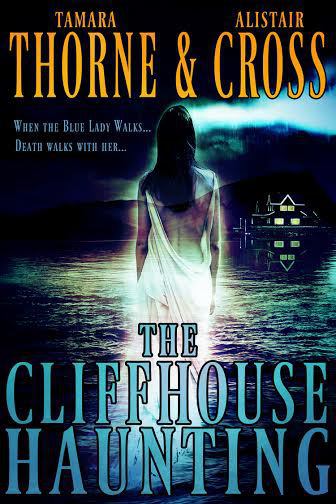
My Review of ‘The Cliffhouse Haunting’ a Novel by Tamara Thorne and Alistair Cross

The Cliffhouse Haunting
A Novel by Tamara Thorne and Alistair Cross

* Spoiler Alert *

the-cliffhouse-hauntingTo best enjoy The Cliffhouse Haunting, it might be necessary to revisit the origin (or at least the semi-recent history) of the carnival, and note the way that Thorne and Cross superimpose elements of the bright chaotic festival upon the more traditional horror backdrop of “the haunted hotel” with all the jumps, starts, and frights that frequent this particular lexicon. Before we unpack all these components however, it should be stated up front that this novel is fun to read. The pacing is lightening, the characters are humorous, the setting is gorgeous, and the monsters are vicious. The plotting is as intricate as one of those labyrinths Dickens symbolized in pieces like Bleak House, and the gargantuan cast of characters reminds us of epic blockbuster films of the 1950s. Still, this piece is not antiquated.  Quite cleverly, Thorne and Cross cherry-pick history when it suits their modern vision of horror and comedy to create a fresh vision of what I might call “delicious reversal.” At times during this piece, it seems by design that the reader cringes at the behavior of the lead characters and marvels at the poetic beauty of the savage. We are part of this exotic parade, and Cliffhouse is more about mirrors and masks than killers and ghosts.

Of course, many allusions are not entirely parallel, and Cliffhouse as “carnival” is not perfect in its symmetry. Easter and traditional carnival rituals bookend Lent, and this novel is certainly not about Jesus. It also takes place around Labor Day and the more fitting setting may very well have been the French Quarter during Mardi Gras as opposed to the San Bernardino mountains of Southern California. Still, this piece is all about masks, personas, and alter-egos, as well as the idea that Cliffhouse brings the “ID” to the forefront instead of hiding him behind the tired façade of our social norms. A story about regular people acting regularly in a big old regular hotel wouldn’t be too intriguing, yet Cliffhouse is one big public street party, chock full of fireworks, Civil War reenactments, and various drunken themed festivities. In what plays as familiar carnivalesque ritual, there is feasting (an Oktoberfest celebration where a serial killer wins ribbons for sausages containing horrific ingredients) role reversals (the police chief Jackson Ballou constantly being shown up both intellectually and physically by his girlfriend Polly), temporary social equality of the dissimilar (Sara Baxter Bellamy, heir to a lucrative hotel falling in love with a talentless assistant who stays in his abusive business relationship with “authoress” Constance Welling for a nauseatingly long time simply because he is so unprepared for the world he cannot find another job until it is handed to him) and permitted rule breaking (as caretaker Walter Gardner risks incredible liability through astounding poor judgment, in telling nine year old Carrie and her seven year old brother Tommy ghost stories involving native girls in slave labor, a woman drowning her children by weighting their bodies down with stones in a sacrifice to the naiad, and a dead women on a swing with her intestines torn out).

But before judging Thorne and Cross for what might seem literary miscues, we have to broaden our focus not only in reference to the concept of “carnival,” but the purposeful dichotomy of monster versus citizen that these authors so boldly propose as an overall paradigm. Clearly, one of the messages here is that the Cliffhouse setting brings out the carnival as a farce, exposing its paraders to irreverence, parody, and degradation. The “innocent” characters have their insides showing, both mentally and physically in this psychotic circus of a world that actually removes the mask of social propriety. Why else would Dr. Roger Siechert (behind the guise of drinking the evil, infected water) wonder aloud in transparent and purposeful author’s exposition why he is saying such rude things to his patients? Why else would the religious Pat Matthews become the night time graffiti vandal and paint bright red penis’s across the front doors of local businesses while his well-to-do wife sits at home making extra money giving phone sex? A mortician’s wife (named Beverly Hill no less) is pelted with tomatoes in a grocery store, and during a girl fight one of the participants rips out the other’s clit jewelry. These people are possessed. By themselves. By their inner demons, and in true carnival fashion, we laugh and cringe in the same way we do when Jonathan Swift modestly proposes we eat our children in order to better preserve national capital.

The fascinating part of the binary here is the monster, especially since it is placed in such opposition to the reanimated “citizen.” Plainly, Thorne and Cross have invented horrific figures of incredible beauty even in their bloodiest, grisliest moments. In terms of the latter, Thorne and Cross play the “inside-out” theme physically at the hands of their murderers in direct counter-point to the metaphorical exposure endured by the hotel guests. As mentioned before, a dead girl is left on a swing with her entrails wrapped around the chains, in effect, holding her in place. A nurse is ripped open with a blender motor by a lover who has a fixation with anal cleansing. While these two examples are brutal in their literal connotation, the symbolic tie to the exposure of the hidden (or the “inner” or the “ID”) is difficult to miss.

There is also a play on masking in reference to the “evil-doers” that makes us all too aware that the dark world might contain more aesthetic congruity than the one playing out under the bright lights of the Cliffhouse lobby. The killers here form a triad, a religious symbol in itself suggesting some sort of spiritual credibility, but more, the masking element between the three players in their “cooperation” with each other demonstrates a universal (and frightening) human truth. The Blue Lady of the Lake uses Hammerhead and the maniac doctor to carry out her heinous work for her in a clear illustration of dissociation. Not that these killers have any sense of conscience, but is it not the “team” that relieves the individual of literal blame? During the holocaust, the superior officers were miles away from the actual atrocities they drew up on paper, and the ones pulling the switches that let out the gas were simply following orders. In this manner, Thorne and Cross invent the most complete characters in the story, not because they need to be relieved of guilt, but rather that most bad guys (if we are to believe in them) think they are good guys. The Blue lady, Hammerhead, and Dr. Roger Siechert are scary because they believe in themselves tremendously and concede to the idea that they experience human need and dissociation in order to exist.

The monsters in The Cliffhouse Haunting possess complex and credible motivations, but their appeal is not limited to the cerebral. They are physically interesting and provide the visual poetry that counteracts the chaos going on in the hotel, the marketplace, and the front lawn in front of the band shell. The Blue Lady fills her victims with lake water and leaves wet footprints on the floor when she leaves. Creepy. Hammerhead captures souls, he believes, and traps them in mirror compacts that he keeps in a special hall. Mysterious. He also uses the claw part of a hammer to kill with a blow to the head, and if the victim is light enough he can hold the body up for a moment with one hand while making her look into the mirror he holds with the other.  (Brilliantly written resourcefulness). And finally, for all of Dr. Siechert’s seeming incongruity in reference to the physical “beauty” of his compatriots and their given devices, he does, after all, kill “authoress” Constance Welling, and we can at least give him runner’s up status for that.

Tied in with the relative beauty of our antagonists, is the more intricate concept of mirroring, that which they do in a far more effective manner than the hotel owners and all of their guests. In terms of the latter, the mirrors are caricatures, poor replicas, parodies. Purposefully I think, Thorne and Cross never fully develop Adam and Teddy, Sara’s two fathers, who come and go more as a mechanism that proves the hotel has owners who walk the grounds and count the chairs once in a while. The Taffilynn’s are perverted anti-images of each other, and Jackson, like a ditzy cliché “blonde” goes out with Polly, the most masculine character in town, and tries to convince himself again and again that he really, really, really isn’t a total idiot for not bringing in the county boys or the feds as the body count rises. Even the lead characters who would demand the locus of our attention are inverted somehow, refracted mirror images that make us look through the wrong end of the telescope. For our hero, Sara Baxter-Bellamy has barely a quarter of the stage time possessed by Constance Welling, possibly the most dislikable character ever invented besides hack-psychiatrist Carl Leland in Tamara Thorne’s Eternity.

Plainly, the truest reflective architecture in this novel is erected by the bad guys at its periphery. In a literal sense, the blue lady fogs all the mirrors of the mortals and lives in a lake which provides a natural (though darkened) reflective surface. Hammerhead captures souls inside his compacts, and Dr. Siechert is so vain it is almost as if he parades in front of perpetual imaginary glass, showing off all the ribbons he wins at Oktoberfest. In terms of emblematic positioning, The Blue Lady, Hammerhead, and Dr. Siechert are preceded by The Blue lady, The Bodice Ripper, and The Gaslight Killer in the prior century, proving that as opposed to the hotel guests and townspeople, the bad guys are the tradition and the inevitable lens through which we will view history.

Thorne and Cross are clever. The plot they create reads effortlessly, and they make us laugh and cringe and widen our eyes, looking away from the text at times to say, “Oh no you didn’t.” But they did. In The Cliffhouse Haunting nothing is sacred, because the carnival is on. We are meant to let our guard down and laugh at those wearing masks that ironically expose our own most hideous truths. And from the sides, the edges, and the margins our dark adversaries stare at us with unyielding eyes, waiting for us to put down the book, to speak out of turn, to drink too much wine, or to slip on the watery footprints they’ve openly left in our paths. According to Thorne and Cross, the proverbial man in the mirror is no more than a loud, raucous joke. It’s what is reflected behind him, in the lake, in the well, and in the bottom of the dumpster that owns all posterity.

The Cliffhouse Haunting is available for purchase on Amazon.com

Posted in Book Reviews, Books, Writing | Tagged , , , , , | Leave a comment

New Short Story in the Works!

I have completed a new short story. It hit me a few days ago, and I came off the novel I have been writing since September to make this new idea materialize. Not to give spoilers, but it is my first Science Fiction piece. The tale involves the future of social media.

I love writing short stories because there is no room to worry about anything except the “Wow” factor. Setting descriptions, structuring, and character development happen at hyper speed, exposed on the run if you will, and the story jumps out at the reader (if you do it well).

In fairness, novel writing is a longer, more “loving” process, no less enticing for the author, just different. There is still the immediacy scene by scene, but there is an overall linking mechanism one has to keep aware of, plot-thread to thread, foreshadowing to payoff. In paraphrase, Stephen King once called short stories affairs and novels marriages. I have found however, that those “marriages” can be wonderful, mysterious experiences, since I never outline. While that may be like jumping off a cliff and hoping for a hang glider, it keeps things exciting. I might have something in chapter three that I find a use for in a different context in chapter twenty-nine. And the fact that I didn’t necessarily see it until later in the process might indicate it won’t be telegraphed to the reader either! While short stories are M-80’s we all love for the pop and roar, novels are fireworks displays requiring intricate preparation.

I came off the novel-in-progress ‘Dead Red’ last week because there was an idea I had that hit me with the kind of force ‘How Bria Died’ had when I conceived it back in 2007. Time to light the M-80. The new short story is called ‘Soul Text,’ and I look forward to seeing where I might place it.

Posted in Books, Writing | Tagged , , , | Leave a comment

The Author’s Graveyard: What a Name!

I named this blog ‘The Author’s Graveyard’ primarily because of the impact the banner picture at the top of each screen had and still has on me. I searched long and hard for the image that would define my writing, and when I stumbled across this particular piece of artwork I knew I had what I was looking for. The man in the back-fill is hideous and intriguing, dead as a door-nail and full of personality, reaching out that hand in a blur to connect somehow. This is what weird fiction means to me in a nutshell…the buried in us trying to be explained and recognized.

I would like to include many guest posts on this blog, and in doing so I would hope to invite an ongoing conversation about the business and art of the genre. I was looking to develop a platform through which I could show my work professionally, but I also wanted to have a space where authors, publishers, designers, editors, readers, and all involved in the artistic community of weird fiction could entertain a continuous lively discussion.

Where better than the graveyard, where there are tomb stones, flat markers, epitaphs, and mausoleums? There are ghosts here and phantoms, secrets in the dirt and darkness in the recesses. There’s a tool shed on the grounds, so let’s break in and tell ghost stories. Let’s go by the lawn crypts and see if there really is something creeping around down there in the shadows. ‘The Author’s Graveyard’ is my invitation to the world. Pick out a plot.  Rattle some chains. Tell me a story!

Posted in Books, Writing | Tagged , | Leave a comment